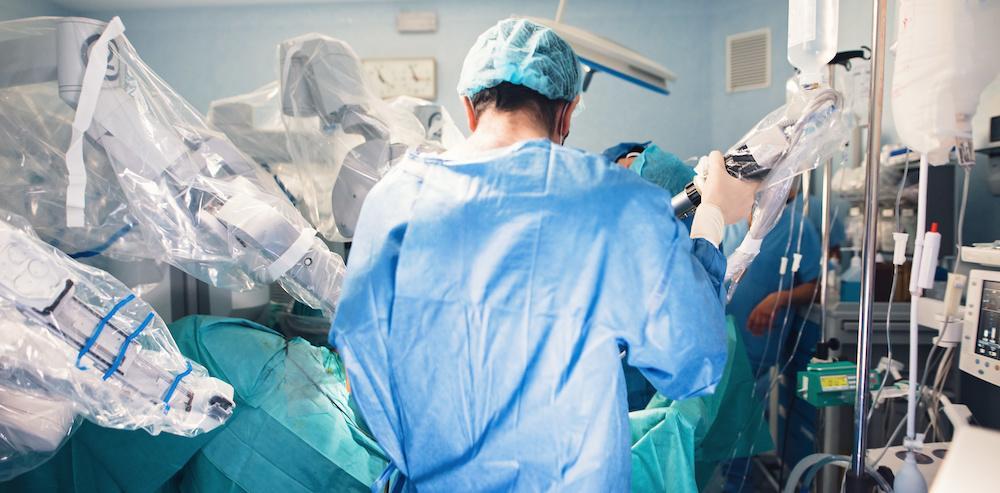
Every year in the United States, doctors perform over 600,000 colorectal surgeries. You may be surprised to learn that colorectal surgery is one of the most common surgeries performed overall. You’ll probably be even more surprised if your doctor tells you that you need such a procedure.
Whether you have colon cancer or a relatively benign condition such as diverticulitis, sometimes the only way to get relief is through colorectal resection. In these surgeries, your colorectal expert removes diseased tissue and attaches the healthy portions of your colon or rectum to one another to restore function.
Our colorectal experts at Colon and Rectal Surgeons of Greater Hartford want to make your colorectal surgery as pain- and trauma-free as possible. That’s why we offer advanced robotic colorectal surgeries when you consult with us in Bloomfield and South Windsor, Connecticut.
How might robotic surgery help ease your colorectal procedure? Following are some advantages, based on the location of your disease or condition.
Do you need colon surgery?
Your doctor recommended a colectomy (i.e., removal of a portion of your colon) because some of the tissue — but not all of it — is diseased. They perform colectomies for conditions and diseases such as:
- Colon cancer
- Blockages
- Diverticulitis
- Crohn’s disease
- Ulcerative colitis
If you have colon cancer, they not only cut away the diseased portion of your colon but may also remove affected lymph nodes that are situated nearby. It takes a great deal of precision and dexterity to cut away diseased tissue and reattach healthy tissue (i.e., an anastomosis). That’s where robotic surgery can be an advantage.
Unlike laparoscopic surgery, which is also minimally invasive and uses small incisions, your surgeon doesn’t stand over your body during robotic surgery. Instead, they sit nearby at a high-tech station, where they control tiny, super-precise, and flexible miniature surgical instruments and a miniature camera.
The monitor attached to the mini camera magnifies the operating site in full-color, 3D, high-definition, and real-time. The combination of increased magnification and specialized instruments that can make minute movements with extreme precision impossible for the human hand to perform makes robotic surgery ideal for complex surgeries.
Do you need rectum surgery?
Surgery on the rectum can be even more delicate and demanding than colon surgery. You may need rectal surgery to remove cancerous tumors. Or, if you have rectal prolapse, your surgeon may need to elevate and tighten your tissues.
In addition, to treat rectums damaged by inflammatory bowel diseases, such as ulcerative colitis or Crohn’s disease, they may need to remove your rectum entirely and perform a procedure that turns your small intestine into a pouch for waste matter.
Why robotic surgery may be your best choice
Besides being able to perform more precise movements than any human hand ever could, robotic systems include built-in tremor filtration technology to eliminate unnecessary movement. The 3D views on the monitor your surgeon uses also magnify the area by 10 times, so they can make extremely precise cuts and stitches.
Surgical incisions are extremely small
With robotic surgery, the few incisions your surgeon needs to make are only about as long as your fingertip. This means there’s less bleeding during the procedure and less chance of infection or other complications.
Reconnection can be performed inside
In traditional open surgery, your surgeon would withdraw the healthy ends of your colon or rectum from your body cavity to attach them. But with robotic surgery, they can stitch together healthy tissue without moving your intestine outside your body. Internal reconnections are associated with fewer complications.
Improved outcomes
When compared with laparoscopic surgery, robotic surgery is associated with improved outcomes, such as:
- Less likely to switch to open surgery
- Less blood loss
- Faster recovery
- Shorter hospital stays
- Reduced rate of complications
Your insurance should cover the cost of your robotic surgery, but always check first. If you need help, call our knowledgeable office staff.
Get the colorectal surgery you need with more precision, less trauma, and faster recovery by booking a robotic surgery by phone or online form today.